Plant Wound response
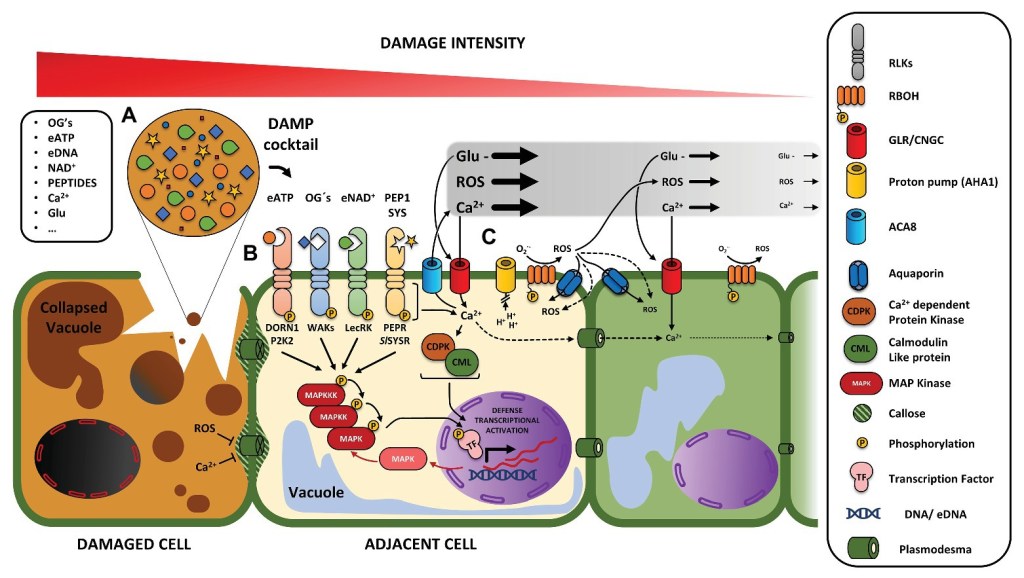
Recognition and repair of damaged tissues is an integral part of life, which upon failure can cause disease or death. While it is easy to acknowledge the concepts of pain and blood clotting in humans or animals as a result of injury, it is difficult to imagine how plants sense and repair damage. Indeed, plants do not have a nervous system or mobile immune cells to mediate wound responses. Nevertheless, plants have developed highly sophisticated strategies for multicellular development and tissue repair under the continuous threat of injury, adapted to their immobile lifestyle. In response to damage, caused for example by weather-related events, herbivores, or human activities, plants can mount local cellular responses and, depending on the severity of damage, a response also in distant tissues, which shares striking similarities (and differences) with animal wound response. We are working to understand the molecular mechanisms that occur when plants are damaged, especially how proteolysis impacts the plant wound response, and strive to translate the newly gained knowledge to improve pesticide selectivity.
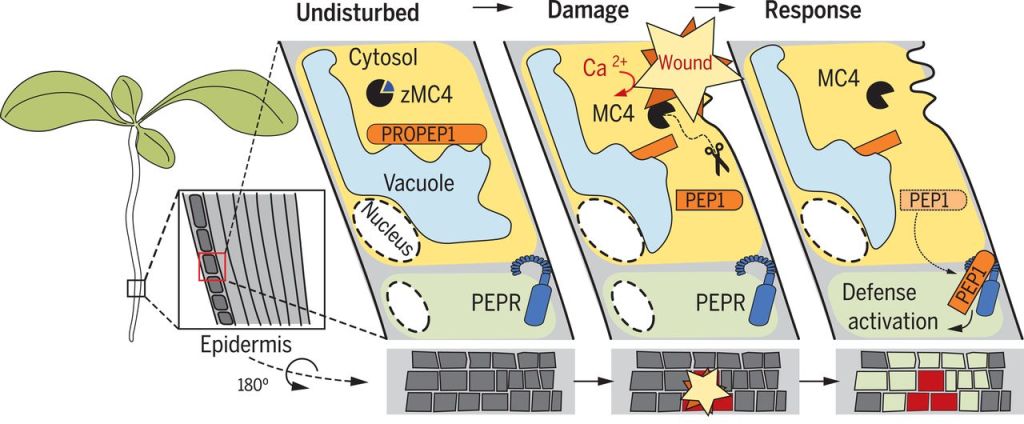
Damage-activated proteolysis – Proteolysis is the process of breaking peptide bonds between amino acids in substrate proteins through hydrolysis, which is carried out by proteases. Next to the complete degradation and removal of proteins, proteolysis can be more limited and induce highly targeted breaks in the polypeptide chain of substrate proteins, commonly triggering changes in the localization, biomolecular interactions and activity of the substrates. Previously, we found that damage to plants can induce the activation of a class of proteases called metacaspases, and subsequent maturation of small signaling peptides required to elicit a proper immune response in plants. Considering the crucial importance of wound healing to prevent plant infection and mortality, there is a surprisingly large knowledge gap regarding the involvement of proteolysis in the plant wound response. Our lab aims to fill this gap through both targeted and large scale analyses of proteases and cleavage of their substrates during physical damage to prove that damage-activated proteolysis is a key player in the plant wound response.
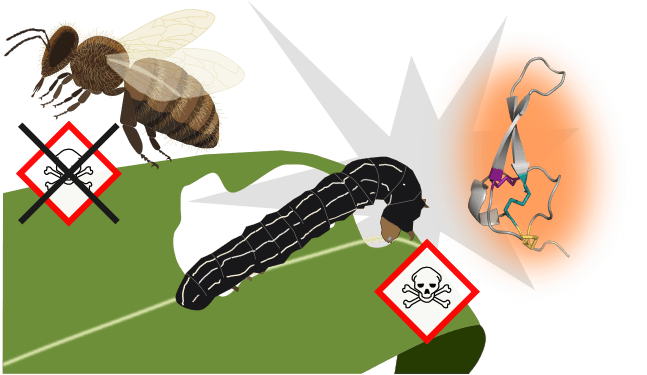
Improving pesticide selectivity – Unofficially called the “windshield phenomenon”, relating to the lack of squashed insects on car windshields, insect declines have been estimated at an astounding 40% up to 75% in some places. Several drivers have been identified, including widespread habitat loss, parasites and diseases, and pesticide usage, where a combination of stresses is the likely culprit of insect decline. That is problematic as insects carry out important functions at the base of most ecosystems and provide important services for agriculture, for example through pollination. We aim to translate the fundamental discoveries in our lab into benefits for nature and society and one route that we are pursuing is the improvement of pesticide selectivity. By utilizing the natural defense system of plants in response to wounding and insect herbivory we attempt to modify pesticides so that pests are targeted but beneficial insects are spared from pesticide toxicity.
Fluctuating light
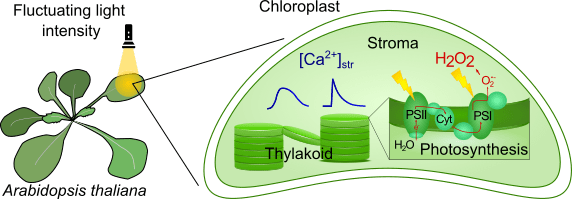
Light intensity is rarely stable during the span of a day – think of changing cloud cover, shading, flickering of leaves and daily rhythms of dusk and dawn. As the primary site of photosynthesis, chloroplasts house the reactions for conversion of sunlight to chemical energy for most food, feed, and fuel in the world. Furthermore, chloroplasts are powerhouses of metabolism and can produce many of the initial products for plant hormones and secondary defense metabolites. How does photosynthesis and metabolism cope with an ever-changing energy supply caused by the input of fluctuating light intensity? Next to being an important macronutrient, fluctuating concentrations of calcium ions (Ca2+) can transduce information from the environment to the cell. So-called calcium signatures are created by patterns of locally elevated Ca2+ concentrations in response to particular stresses and can signal the perturbed cellular homeostasis through changes in protein conformation or protein-lipid interaction. The chloroplast can manage its own Ca2+-dynamics and storage capacity. We investigate the link between chloroplast calcium signaling and response to light intensity and how that may affect photosynthesis and plant metabolism.
Funding by:
Wallenberg Academy Fellow 2021, grant 2021.0071
European Research Council 2021 Consolidator, grant 101044878 DETOXPEST
 |  |  |
© Simon Stael 2023
 Simon Stael's lab